
Community organising on health inequalities
We live in a city where your post code, and your tax bracket can have a measurable impact on your life expectancy. There is a 10 year disparity in life expectancy between the richest and poorest neighbourhoods when compounded with the differences of communities that shifts even more.
Since Marmot’s 2010 ‘Fair Society, Healthy Lives’ Review there is a growing understanding that wider determinant of health such a housing, safety and poverty affect people’s health as much as the availability of NHS services, but little on the ground has changed in terms of improving outcomes. In many cases the situation has got worse, particularly in light of the Birmingham City Council’s section 114 notice cutting public support services to the bone.
Birmingham Citizens, a 13 year old alliance of community groups, places of worship, education institutions, and social enterprises, offer a different approach to tackling health inequalities through broad based community organising.
It’s central argument is that if we want to see change in whatever is putting pressure on people’s lives across our communities, then we need to be interested in building their collective power to affect decisions made by those who have the authority to do something about those pressures.
In recent years, we have been finding the underlying current to all of our city-wide campaigns [Housing, Work & Safety] is made up of two things: building social cohesion and tackling health inequalities. In this blog we share our work on the latter.
Over a decade of community organising around health inequalities
We in Birmingham Citizen act upon things that matter to communities served by our member institutions. Our current priorities of Work, Housing and Safety speak to the wider determinants of health, but since our founding in 2013, we have been building a significant track record of community organising around health inequalities.
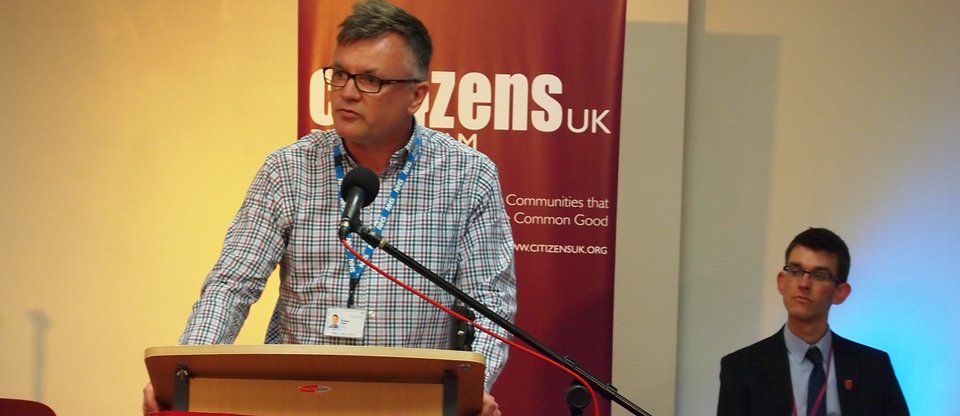
In our first ever city-wide campaign launched in 2013, led by students from Birmingham Newman University we secured the commitment of NHS Commissioners to end the gap in access to specialist mental health treatment for 16-17 year olds (some 4,000 teenagers affected in the city).
This gap had existed for over a decade despite previous annual health summits and conferences.
Following this pledge made at our inaugural Accountability Assembly in May 2014 attended by over 400 people at Mt Zion Church in Aston, the 0-25 youth mental health service in Birmingham, now known as 'Forward Thinking Birmingham' was established.
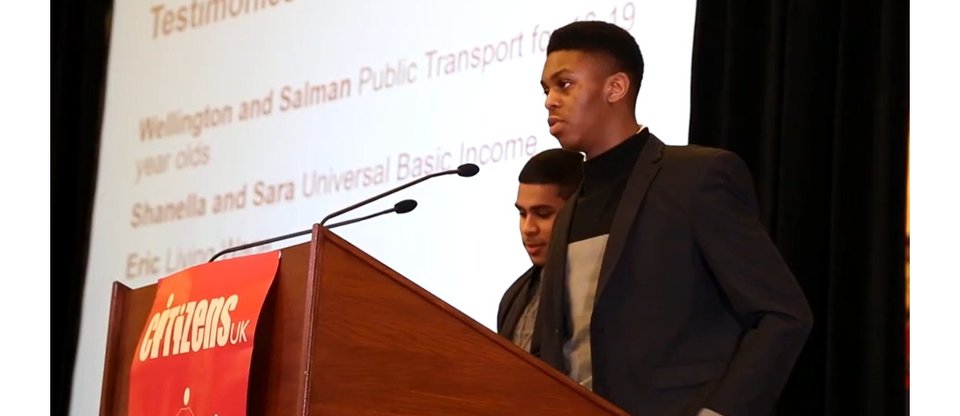
In 2016, we delivered the first ever NCS (National Citizens Service) project to use community organising training and recruit young people directly via local voluntary organisations. This was to increase participation from underrepresented ethnic minority communities.
Two of the young leaders in the project went onto deliver asks at our Mayoral Assembly attended by over 900 people in 2017. They called for free public transport for 16-19 year olds in education/training.
In September 2017, the Mayor of the West Midlands, Andy Street acted by introducing half-price travel for 16-18 year olds - reducing the cost of living pressure for young people.

In 2019, we partnered with Aston University & Aston Villa Foundation on a research project related to eye health in communities.
Led by Prof Leon Davies & Dr Angela Jeffery with funding by UKRI, the project enabled communities to share their barriers to accessing eye health support and helped shape the Villa Vision project - a mobile unit Aston Villa Foundation take into schools to educate children about eye health, screen their vision and conduct eye tests and dispense glasses where needed.
In addition to providing each child who needed it with 2 pairs of glasses, the project also identified specific issues on patient information and experience in accessing NHS services.
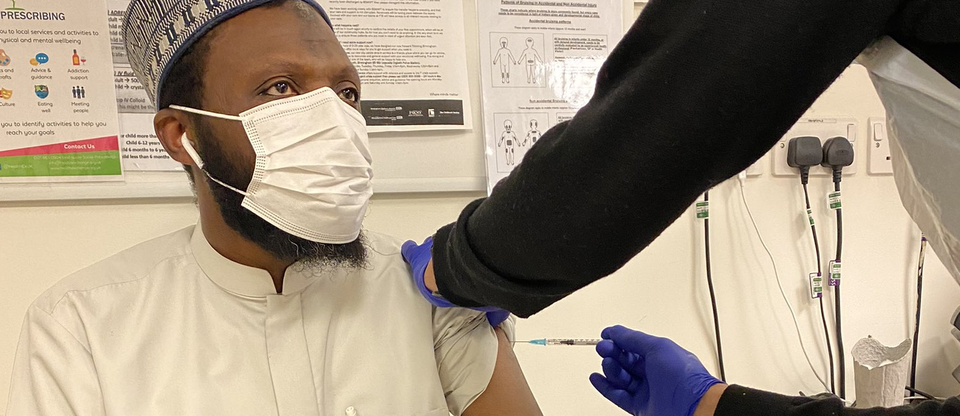
Between 2020-2022, we teamed up with Birmingham City Council’s Public Health team & others in civil society to respond to the disproportionate number of people in our communities dying from Covid.
We undertook deep community listening to help authorities make sense of issues. We first raised alarm about the impact of the virus to the rising numbers of families in Bed & Breakfast Hotels (B&Bs) and temporary accommodation.
We also produced a series of community videos to get accurate information out about the covid vaccine, with one of our member organisations, the Al Abbas Islamic Centre, amongst the first in the UK to become a vaccine hub.
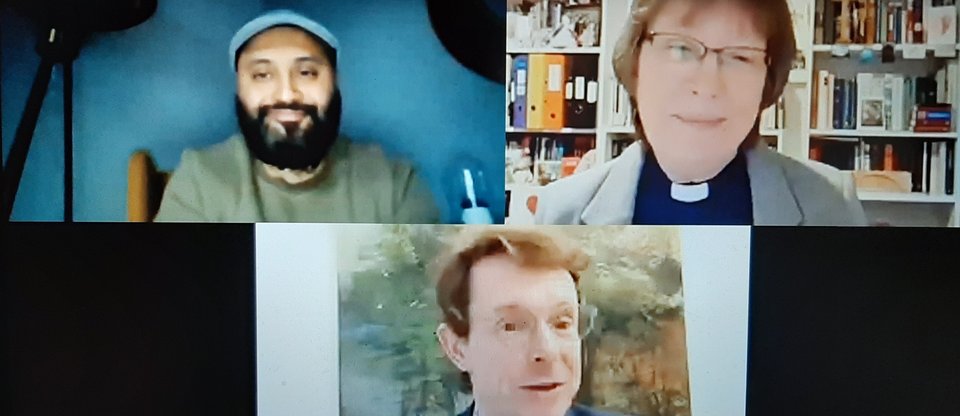
In 2021, ahead of the regional elections we held an online assembly, joined by over 200 people, where we raised the need for‘mental health counselling in schools & colleges’ as an important action to improve youth safety producing this short video clip.
On re-election, the Mayor of the West Midlands, Andy Street, launched a Mental Health Commission focusing on young people - to which we were invited to join. The Commission accepted within its recommendations the need for access to mental health counselling in schools, colleges and other education institutions, and in 2024 the Mayor announced a £1M fund to pilot it in colleges.
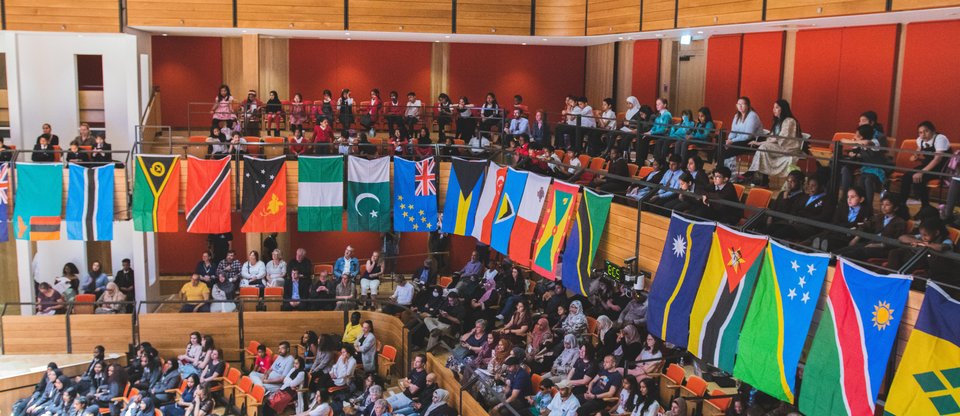
Following the announcement of the Commonwealth Games coming to Birmingham, we consistently called for better access to free/low cost youth and sports facilities as well as the revamp of MUGAs (multi-use games areas) in parks leading up to the Games and as part of its legacy.
In June 2022, our youth leaders put these asks to authorities, at a public Assembly hosted by the University of Birmingham.
In January 2024, it was confirmed 17 Basketball courts in MUGAs will get revamped and over a year later in October 2025 this was delivered.
Between 2021-2022, we were commissioned by NHS Bloods & Transplant to train local anchor organisations in Birmingham, Manchester & London in using a community organising approach to impact relationships with Black African, Afro-Caribbean and South Asian Communities.
These communities were amongst the population most affected by the pandemic and suffer health inequalities. The project allowed 4 of our member organisations in Birmingham to explore what works in navigating the barriers and challenges experienced by them.
This included the Al Abbas Islamic Centre involved in a world record attempt and the BLESST Centre film group conversations on men's health in a community barbershop.
Between 2022 - 2023, we teamed up with Aston University and Birmingham Community Healthcare NHS Trust to undertake an extensive listening campaign on the barriers our communities face in being able to stay healthy.
It found community members reported a significant amount of issues relating to poor patient access and experience in navigating health services.
Community partners also came up with small local project activities to address some of the issues they were able to impact.
Birmingham Community Healthcare NHS Trust are still taking action to address the barriers by working with the GP Support Unit & Pharmacy First to improve primary care access, to supporting people with lived experience to be part of programme boards to re-engineer services.
Between 2022-2024, we teamed up with CREME at Aston University & Ashley Community Housing to support hundreds of people out of work in our communities affected by a range of barriers including english literacy, health and housing needs.
We also produced a policy briefing paper on the case for community advice surgeries in supporting households with multiple needs. Please read it here.
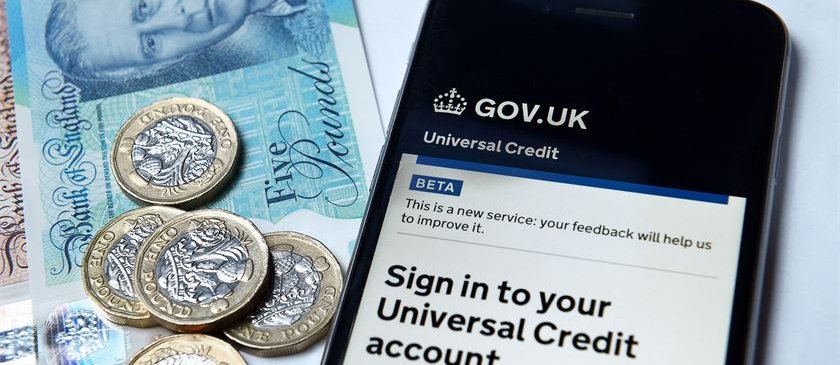
We were delighted the DWP chose to deliver outreach Universal Credit (UC) advice surgeries in three of our member organisations. Here local people could see in-person an experienced DWP officer to help them navigate their UC and job search challenges.
This is still available today.
Birmingham is an officially recognized Living Wage Place, having achieved milestone recognition in 2021 for its collaborative work with us alongside the Living Wage Foundation, and local anchor institutions.
Please watch this short video here charting how our real living wage campaign progressed over a decade.
This year our Work campaign is focused on getting agreement for the proposed Sports Quarter in Small Heath to become a Living Wage Zone. This will positively impact the lives of thousands of local people affected by low income.
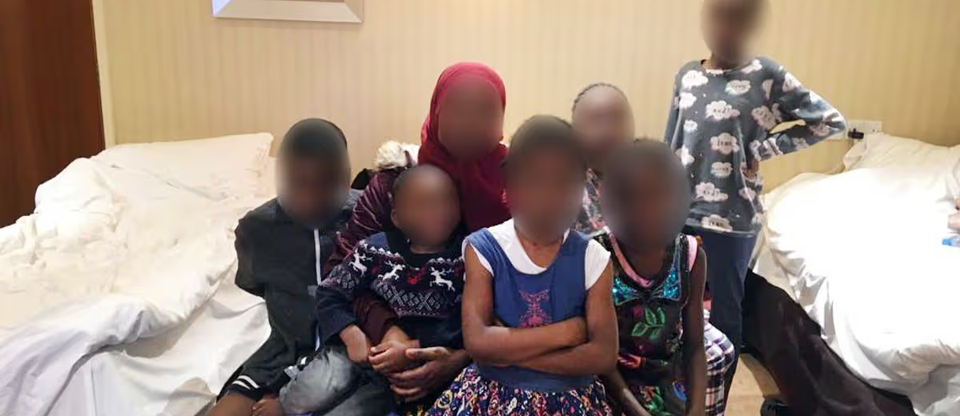
Our community organising over the past decade has unpacked the worsening of the housing crisis in our city, as over 12,000 children are growing up in temporary accommodation whilst many households face an uphill struggle to meet expensive rents, get repairs sorted and heat their homes.
Please read about the work of our Housing Campaign Action Team here.
This year we are collaborating with Public Health & Housing officials at Birmingham City Council & the West Midlands Combined Authority to see the launch of the first ever Temporary Accommodation Charter.
Whilst our youth leaders in the B19 postcodes of the city spearhead a campaign for a Net Zero neighbourhood where they are growing up.
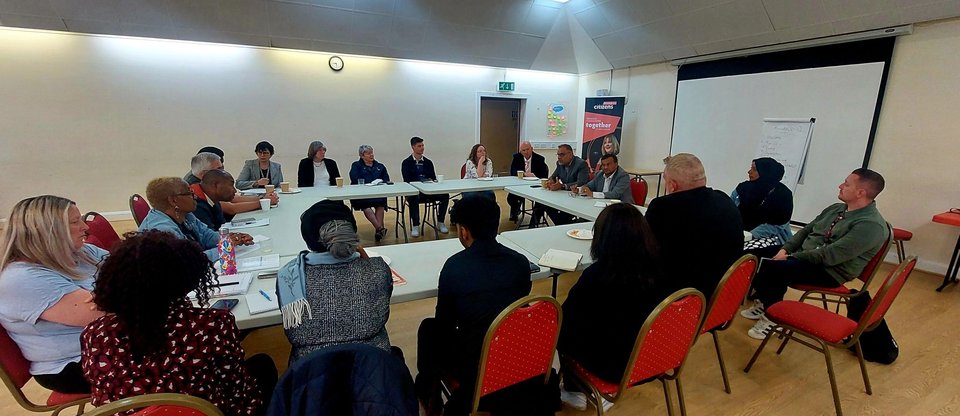
The connection between community safety and health inequalities is seldom researched. Our safety campaigning for over a decade has found along with the significance of our online lives, the choices people pursue - be it on health - are still affected by how safe they feel where they live/work.
Please read more about the focus of our safety campaign's work here.
Over the next 12 months, we will be going deep in the 3 ward clusters of the city where we have member organisations: Lozells, Small Heath & Bartley Green to strengthen relationships between local communities, elected representatives and public agencies through neighbourhood organising.
We will be ensuring tackling health inequalities is an integral part of this work.
So, what have we learnt?
Building the power of communities to impact change requires a broad-base of civil society to act together.
In all of the examples mentioned above, you will find a diverse mix of member faith, education, community & NHS institutions taking collective action on an issue.
They come to broad based organising with their own credentials of undertaking health related projects and programmes in their local communities.
Amongst many they include:
1. Community organisations like the Tao Centre, Saathi House, Aspire & Succeed, The BLESST centre, Dream Chasers Youth club & Uplift CIC
2. Birmingham Community Healthcare NHS Trust
3. Education institutions like Aston University, Birmingham Newman University, the University of Birmingham & Ark Victoria Academy
4. Places of worship like Al Abbas Islamic Centre and Lozells Methodist Church & Community Centre
The continued participation of smaller community partners - be they voluntary organisations or social enterprises, requires investing in their development.
A key feature of our work over the past decade has been co-creating campaigns and projects with member organisations.
To enable our smaller community partners to be able to do this consistently, we have done two things:
1) included them in project budget activities, and
2) working with CREME at Aston University Business School, developed the Business Leaders' Group - a peer support network for their organisational sustainability and growth, which deliver training workshops such as here.
Securing change on issues city-wide requires going deep in local neighbourhoods.
We welcome the current move towards Neighbourhood Health, but it needs to put actual citizens and community organisations in a neighbourhood in the driving seat.
This doesn’t just mean one VCSFE lead, it means having people at the table who carry local following and credentials on the ground.
The current system is about moving NHS services from Acute to Community settings. This is not the same as community involvement to shape 'neighbourhood health'.
As described above, there is significant work to be done to regain trust and confidence of local communities especially where their general patient access & experiences of health services have been poor.
Health inequalities are unfair, avoidable, and systematic differences in health between groups of people. They show up in how long people live, the illnesses they experience, and the quality and accessibility of the care they receive.
In Birmingham this manifests in life expectancy in poorer areas such as Nechells being 10 years less than more affluent areas such as Sutton Coldfield. People in poor areas also tend to live more of their last few years in poor health.
We hope this blog offers insights on a community organising approach to tackling health inequalities - one that starts with building the power of people to act together to win change.
We will be going deeper in our work on health inequalities, and look forward to hearing from you.
If you would like to find out more and get involved, please email birmingham@citizensuk.org